Global Climate Change and Human Life
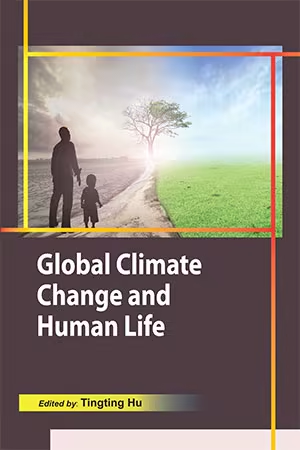
Tingting Hu | 2023 | ISBN: 1682508447 | English | 296 pages | True PDF | 10 MB
Climate change is one of the great challenges of our time. The consequences of climate change on exposed biological subjects, as well as on vulnerable societies, are a concern for the entire scientific community. Rising temperatures, heat waves, floods, tornadoes, hurricanes, droughts, fires, loss of forest, and glaciers, along with disappearance of rivers and desertification, can directly and indirectly cause human pathologies that are physical and mental. However, there is a clear lack in psychiatric studies on mental disorders linked to climate change. The severity of these health risks will depend on the ability of public health and safety systems to address or prepare for these changing threats, as well as factors such as an individual's behavior, age, gender, and economic status. Impacts will vary based on a where a person lives, how sensitive they are to health threats, how much they are exposed to climate change impacts, and how well they and their community are able to adapt to change. People in developing countries may be the most vulnerable to health risks globally, but climate change poses significant threats to health even in wealthy nations such as the United States. This book enhances understanding of environmental changes and the relative response to the socio-economic challenges of development. Climate change is already impacting health in a myriad of ways, including by leading to death and illness from increasingly frequent extreme weather events, such as heatwaves, storms and floods, the disruption of food systems, increases in zoonoses and food-, water- and vector-borne diseases, and mental health issues. Climate change science points to an increase in sea surface temperature, increases in the severity of extreme weather events, declining air quality, and destabilizing natural systems due to increases in greenhouse gas emissions. The direct and indirect health results of such a global imbalance include excessive heat-related illnesses, vector- and waterborne diseases, increased exposure to environmental toxins, exacerbation of cardiovascular and respiratory diseases due to declining air quality, and mental health stress among others. Vulnerability to these health effects will increase as elderly and urban populations increase and are less able to adapt to climate change. In addition, the level of vulnerability to certain health impacts will vary by location. As a result, strategies to address climate change must include health as a strategic component on a regional level. The co-benefits of improving health while addressing climate change will improve public health infrastructure today, while mitigating the negative consequences of a changing climate for future generations. This book presents both practical and theoretical aspects of global climate change from across geological periods and its impact on human life.
Quick check before we show the links
Helps us keep automated scrapers from hammering the filehosts.